
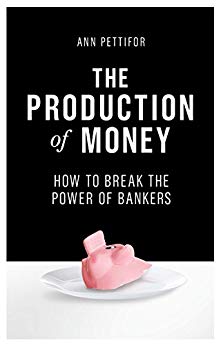
This book by Ann Pettifor is a clearly written explanation of how the financial system can be used, to activate or redirect the resources of the state in favour of whatever great project may be deemed important. Her arguments are a huge challenge to the idea that national economies must be run like a domestic household where expenditure is tightly controlled and is inevitably constrained by income or debt burdens. On the contrary, she explains how the ambition of a nation should be limited only by the extent of its actual resources in terms of its available labour, education and its physical and geographical assets. I note complaints in a number of reviews that she does not provide a complete implementation plan, in particular for those aspects of her proposals which require supra national reform of the banking system; for that to happen however, the obvious failures of the current system need to be challenged by a credible alternative. Ann Pettifor offers such an alternative, which has a track record of success in prewar regeneration of the US Economy by the new deal, the financing of the British War economy, and the post war Labour Government and the relative stability of the post war international economy – a framework which was a somewhat diluted version of Keynes prescriptions and ultimately overtaken by the so called “Nixon shock” which ended the regulation of the post-war economy provided by the Bretton Woods system.
If you’re not inclined to read a book on economics, then this interview with Ann Pettifor on the Sustainablility Agenda Podcast is worth a listen. Whilst the interviewer does not ask particularly searching questions, he does allow space for Ann Pettifor to set out her case. The interview is linked to the release of her most recent book The Case for the Green New Deal which is definitely on my reading list.

 Carruchan