Freedom’s Just another word for nothing left to lose.
This line from Kris Kristofferson’s 1969 song, Me and Bobby McGee, offers a memorable, if somewhat world-weary stab, at defining freedom, and then adds the further, deadpan qualification:
… nothin’ ain’t worth nothin’, but it’s free.
Whatever freedom may be, then, it’s not something that can be tagged with a market value.
The song, in general, is an evocation of freedom at odds with that other vision of freedom which, in the United States, has become hardwired to the idea that unfettered market capitalism is the begetter of all good things and all good things can be bought. This brasher version of the American Dream is built on the somewhat doubtful proposition that everyone, no matter how humble their origins, can, by hard work, raise themselves up to enjoy the very best that the world has to offer. Everyone is free to participate. Of course, there are winners and losers, but the implication, is that the contest is a fair one: yet as Leonard Cohen intoned his litany of what Everybody Knows:
Everybody knows that the dice is loaded.
The same song includes the line: Everybody knows that the plague is coming. I feel sure that Cohen would have been amused by the idea that he had powers of prophecy and, no doubt, had something less specific than COVID-19 in mind when he wrote it. Certainly, the song has nothing to say about how an economy decimated by a plague can be restored to health. This is a conundrum which is forcing many conservatives to accept the need for large scale state interventions to address the immediate economic crisis of the current pandemic, and also as the basis for building a recovery from the coming economic slump. Nevertheless, there is a persistent conservative caution with regard to the supposed threat to our freedom which it is suggested that this growth of the state will pose. Donald Trump, in his own somewhat mystic utterings on the subject of Covid-19, has hitherto down-played the significance of the China Virus and encouraged a business as usual approach to restoring the economy, rather than a deviation from the market fundamentalism on which he has built his business empire and his rise to the Presidency. Now that he himself has succumbed to the virus, so much depends on how he fares in the coming days and weeks, but it seems, most probably, that if fortune favours his recovery, he shall bounce back with a renewed belief in his old economic creed. I shall refrain from speculation on the other possible outcomes.
Trump’s hostility towards The Patient Protection and Affordable Care Act — better known as Obama Care — was founded upon the belief that even the provision of something as fundamental as healthcare should be left to the free market regardless of the failures of such a system to address the needs of those in a precarious financial situation. The history of his own business career is littered with legal actions against anyone who attempted to obstruct the growth of his property empire by invoking regulations of one kind or another. In this enterprise he was ably assisted by his ruthless and brilliant lawyer, Roy Cohn, as is documented in the scrupulously researched biography, Trump Revealed, published by New York Times journalists, Michael Kranish and Mark Fisher, in 2016. [1] As we move towards the 2020 Presidential elections, Trump has been attacking and mocking Joe Biden on many fronts, suggesting that he is against God; that he is mentally unfit [2]; that he is Sleepy Joe. His ideological core, however, is laid bare, in his insistence that Biden is a puppet of the radical left. [3], with the unmistakable insinuation that Biden’s election is a threat to market freedoms and by extension to the liberty of US citizens. For Trump, the free market is sacred ground beyond the limits of which, his own morality has been a matter of convenience. Far from casting the traders out of the temple,Trump and his acolytes have raised up the unconstrained market place to be their temple.
The quasi-theological status of this faith in markets to produce fair outcomes draws on the philosophy of economists such as Milton Friedman, who argued that, Better basic legal protection of business-economic rights and freedoms would be in the interests not just of economic growth and prosperity but also of democracy and freedom in society at large. [4] This linkage of the freedom of business to freedom in a wider sense is deeply embedded in conservative political thought, but conveniently ignores what Everybody knows:
… the fight was fixed
The poor stay poor, the rich get rich
That's how it goes
Everybody knows
Whilst it is clear that some are able to escape poverty and to find success in one area of life or another, this requires a mixture of hard work, good luck and exceptional ability or talent, and therefore is an escape route available only to a minority. The United States, like many other liberal democracies, is not only unequal in terms of wealth, but also, more critically, unequal in terms of the opportunity to be a successful and prosperous person. And in the meantime, many who are making a valuable contribution to the common good, or have the potential to do so, are undervalued or cast aside.

Donald Trump’s most enthusiastic support comes from parts of the United States which in recent years have been down on their luck. It seems paradoxical that their allegiance should have been so captured by this billionaire New Yorker. Many of them, one suspects, would be more at ease in the demi-monde of Bobby McGee, singing every song that driver knew, than in the gilded opulence of their seducer, who has, at least until this moment, managed to project a remarkable vigour for a 74 year old, strutting the stage like a pantomime devil, with his faintly orange glow, his self-satisfied smirk and his homespun philosophy, with its defining characteristic of telling it how it isn’t. No exorcist has yet appeared capable of casting out these bad spirits, but there is surely hope that many Trump supporters will awake some day from their nightmare, albeit with a pounding headache and a bad taste in their mouth: and America will move on.
*
Capitalism, certainly, by driving innovation and productivity, has extended prosperity and raised millions of people from poverty. Yet despite the widespread embrace of the consumer lifestyle, what animates people most in the idea of freedom and liberty is not the choice offered by the cornucopia that capitalism has set before us, or the right to engage and compete in business, but rather the freedom to live according to their beliefs or to live out their identity without fear of obstruction. Yet conservatives, and conservative economists in particular, continue to insist on the alignment of freedom and liberty with free enterprise and free markets, as though the latter inevitably depends upon some unconstrained version of the former.
Forgive me for repeating what seems obvious: there are other important freedoms, which may prosper or be thwarted, regardless of the presence of a market economy, for example, to practice a religion or live without a religious belief; to be unconstrained by racial prejudice; to express one’s sexuality as one chooses; to live out one’s culture without impediment, or even to live at odds with one’s culture; to be eccentric and to make choices which set one apart as an individual. All of these seem somehow more fundamental freedoms than the liberty given pre-eminence by conservative economists as a hedge against the growth of a socialist and overbearing state. A more obvious threat to individual liberty than the growth of the state is prejudice and intolerance. To be sure such prejudice and intolerance may be part of the institutions of the state, but these defects are just as likely to run through private companies and dominant subgroups at every level of a society. Unquestionably, the state can be a threat to freedom and liberty, and there are many examples where overbearing governments control the lives of their citizens and are content to use coercive power to do so. Equally though, there are many countries which are part of what is generally acknowledged as the free world and where there is a thriving state sector delivering many key services; much of Europe indeed, falls into this category.
Free markets, are no guarantee of liberty, even where they are set against the background of a liberal democracy, with free and fair elections, freedom of speech, an independent judiciary, and a bill of rights. The freedom of many groups may be compromised, restricted or abused simply as a consequence of sinks of prejudice and intolerance which continue to exist beneath the surface. Whether it be religious or ethnic minorities, the LGBT community, or indeed anyone who is set apart by difference of one kind or another, it is clear that despite much progress in the realm of individual liberty, many people are still not free to be themselves.
The energy of the market does not arise from compassion or a desire to nurture the customer. The free market has no fundamental interest in this objective, whereas a democratic state has the potential to see a bigger picture and to play a part in the development of a more accepting and tolerant culture, perhaps even by regulating the practice of business and enterprise to ensure that everyone gets a fair shot.
As Professor Michael Sandel advocated, when interviewed recently on the Talking Politics Podcast:
…a politics of the common good is not a politics that turns its back on individual freedom, but rather one that recasts our understanding of freedom to connect it with the sense in which we share a common life, and that we enjoy what success we have partly through seeing ourselves in the recognition of our fellow citizens for the contributions we are able to make to the common good. [5]
*
Freedom and liberty are words which in practice are often appropriated by individuals or groups to identify and promote their own interests. The associated ‘visions’ of freedom are often self-serving and even hostile to a broader vision which seeks to achieve a balance, by whatever means, such that everyone is able to do and say what they think. Implicit in any such balance is an understanding that freedom must always exist within a framework of checks and is at its best when it is accompanied by a culture of tolerance.
Erich Fromm’s 1976 book, To Have or to Be, highlights a dichotomy with relevance to this discussion. The central idea of the book is a simple one which identifies two basic values, having or being, that compete for a place in our nature. These values may be cultivated, one or the other, to a greater or lesser extent, but in whatever balance they become manifest, define every aspect of a life. A human relationship, for example, may be founded on the free exchange of thoughts and ideas, or by contrast, be more concerned with domination and control, with one person gaining or having control over another. Fromm suggests that the impulse or need to control in this way is associated with the impulse to control in other areas of life, and this is most obviously expressed in the importance an individual places on private property, personal wealth and conspicuous consumption, but may even be evident in the way we eat our food, either savouring it or eating hastily, without thought, possessing the food by its consumption rather than enjoying it. Or when reading a book, do we read quickly so that we can tell others that we have read the book, or do we read at a pace which takes pleasure in the experience and which has a less acquisitive intent.

Fromm’s preoccupation with this theme arises from his perception that the consumer capitalism stimulates our desire to have things at the expense of our enjoyment of doing things. The desire to have things, more things, better things, is at the very heart of the expansionist vision of capitalism and inevitably feeds a competition for scarce resources. Perversely, elements of quality emerge in products which are more concerned with status than with the actual purpose of the product; for example, designer clothes, expensive cars and an entire genre of luxury items. Many things become desirable simply because their availability is limited and they can be enjoyed only by a privileged few.
A practical person or craftsworker may, by contrast, experience their greatest satisfaction and freedom in the act of repair, maintenance or creation. For this purpose they may need only access to tools, materials and space, not necessarily even to own these things.
We are all, in differing degrees, a mixture of these two values, but in recognising this, it is possible to see how the balance of the two, both in ourselves or indeed, in our culture, may be shifted towards either the having or the being extreme. A culture developed around the idea of being, of providing opportunity and access to resources, has the potential to offer a more significant experience of freedom to its citizens than a society which places great importance on the acquisition of wealth and on consumption. Donald Trump is the example par excellence of this latter phenomenon, valuing people by their wealth, disparaging people as losers and speaking of and displaying his own wealth at every opportunity.
Moving our culture more in the direction of being cannot easily be done by statute, but it is clear, faced as we are by obvious limits to growth, that a society built on the idea of freedom to be, as distinct from freedom to have, offers a more viable future for our planet, and a more inclusive vision for all citizens. For freedom is an elusive idea and not the simple value that those who proclaim it most ardently would have us believe.
*
James Rebanks in his recent book English Pastoral describes his grandfather’s resistance to the revolutionary changes which took place in UK agriculture in the wake of the Second World War. This resistance was made more possible by the character of his grandfather’s Matterdale Fell farm, set in an upland landscape not so easily tamed by the new technologies. But on his Father’s farm, where Rebanks grew up and, leaving school aged sixteen, began his working life, he watched progress first erode and then sweep away traditional farming practices. His father, unlike his grandfather, accepted the inevitability of change, but grew deeply troubled by what he saw developing around him as “progress” destroyed much that was of value to him. This transformation may have been a more benign revolution than Stalin’s collectivisation of Russian farms, [5] but in its own way it was both irresistible and brutal.
For Rebanks, his grandfather’s refusal to be swept along by the tide was initially perplexing, but ultimately an inspiration. In a short paragraph encapsulating his grandfather’s stubborn resistance to change, Rebanks offers an idea of freedom not so far from that woven into Kristofferson’s Me and and Bobby McGee, but a million miles from that of Donald Trump.
There was no shame in having very little, Grandad said, quite the opposite. It was better to hold on to … freedoms, even if it meant being poor by modern standards.The constant wanting of shop bought things, he held in disdain. He thought …(his generation) had understood something about freedom that everyone else had missed, that if you didn’t need things – shop bought possessions – then you were free from the need to earn money to pay for them.You couldn’t live from a little fell farm if you wanted foreign holidays and fancy meals out all the time. You had to live within your means. [6]
As I wrote this out, a line of poetry came to mind; Getting and spending we lay waste our powers…I struggled to name the author — perhaps T.S.Eliot? Google supplied the answer, and however hopeless my memory of such details may be, the resonance was striking. The words are from William Wordsworth’s sonnet, The World is Too Much with Us. Wordsworth was born in Cockermouth, just across the English Lake District from Matterdale. The World is Too Much with Us is the poet’s response to the first wave of the Industrial Revolution. James Rebanks in his recollection of his grandfather’s words, has reframed for the 21st century a kindred response to the riptide of progress which in the 1950s and 60s swept away long established practices of mixed farming and crop rotation.
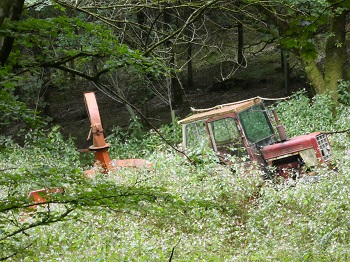
Rebanks goes on to remark with regard to a later phase of this transformation: The economics books I read were all about how things changed for the better; they didn’t say much about the losers, the misery, and people hanging on for years, sometimes decades, because they knew nothing else.
Yet, as Rebanks explains, it is becoming clear that much greater damage has been done to our agricultural capital by industrialisation, than even this might suggest; a complex and poorly understood ecological system which exists in our soil, is being destroyed by modern farming with its pesticides, its fertilisers, it’s antibiotics, its monstrous buildings and machinery. In the final part of his book, Rebanks describes the steps he is taking in his own farming practice to push back and to restore a balance between our human needs and the needs of the environment, and offers a hopeful message. It seems doubtful, however, that this enterprise can succeed on the larger scale necessary, whilst agribusiness remains rampant. [7] An unconstrained free market, whatever bounties it may bring, does not reliably deliver the freedoms we crave, but rather is a tiger which must be tamed before it consumes the very world we live in; before, in a final declaration of independence, it consumes itself.
The World Is Too Much With Us
By  William Wordsworth

The world is too much with us; late and soon,
Getting and spending, we lay waste our powers;—
Little we see in Nature that is ours;
We have given our hearts away, a sordid boon!
This Sea that bares her bosom to the moon;
The winds that will be howling at all hours,
And are up-gathered now like sleeping flowers;
For this, for everything, we are out of tune;
It moves us not. Great God! I’d rather be
A Pagan suckled in a creed outworn;
So might I, standing on this pleasant lea,
Have glimpses that would make me less forlorn;
Have sight of Proteus rising from the sea;
Or hear old Triton blow his wreathèd horn.
Like, share or comment at the Facebook link!
Acknowledgements
Me and Bobby McGee https://www.youtube.com/watch?v=G-J7mLyD3yc
This link is to the Kristofferson original version of the song, which has however been covered by countless other artists.
Everybody Knows https://www.youtube.com/watch?v=8IfmiKnZi3E
Sharon Robinson, one of Cohen’s backing singers, has a credit in the writing of this song but it has all the hallmarks of Cohen’s work.

Thanks to Elaine for help with proof reading, advice and comment. The final product, including errors, are mine.
References
1] Trump Revealed by Michael Kranish and Marc Fisher
2] Trump’s Latest Trolling Of Biden’s Mental State: Calling For Drug Tests Before Debates Andrew Solender, Forbes
3] Trump’s 2020 strategy: paint Joe Biden as a puppet for the ‘radical left’ David Smith, The Guardian
4] The Case for a New British Bill of Rights Industrial Systems Research Archive
5] Talking Politics 24Sept2020 Professor Michael Sandel in a discussion, prompted by the publication of his book: The Tyranny of Merit:
6] For an overview of Stalin’s Collectivisation of farms; https://en.wikipedia.org/wiki/Collectivization_in_the_Soviet_Union
7] English Pastoral — James Rebanks
8] Wilding — Isabella Tree
Whilst James Rebanks also refers to the problems of damage to soil, this is also a theme developed in Isabella Tree’s book, Wilding.
In chapter 16 she describes in stark detail the damage done to our soil by the processes of industrial farming, but goes on to offer a way back to soil health through the strategy of rewilding by which she and her husband Charlie are returning their West Sussex farm to nature. One of the epigraphs to this particular chapter quotes Franklin D Roosevelt in a letter to state Governors on the matter of a Uniform Soil Conservation Law, 1937. He says: The Nation that destroys its soil destroys itself.
Featured Image
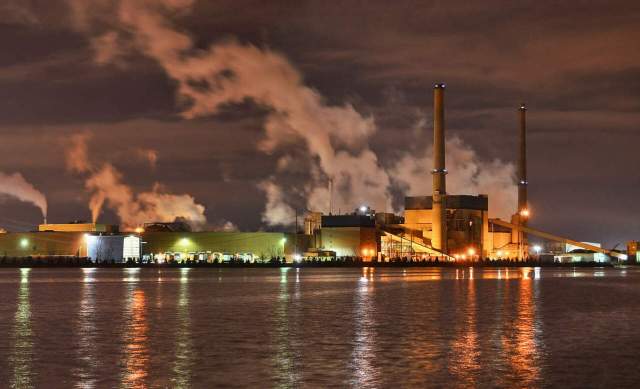

 Carruchan