
The UK parliament: the journey to a universal adult right to vote; a critique of the electoral and party system; the first draft of a reform proposal. Main article, approx 4300 words.
It is a relatively recent idea that the quality of our democracy is the pre-eminent measure of our freedom and that inherent in this should be the right of every citizen to a vote of equal value. So far as the vaunted freedoms of the United Kingdom are concerned, forget the Magna Carta[1215]; forget the Declaration of Arbroath [1320]; forget the Glorious Revolution[1688]: it was the Great Reform Act of 1832 which set UK politics on a modern democratic footing and started the near century-long struggle for a universal adult franchise.
In the early years of the journey to universal franchise, so long as electoral contests were between just two parties — and there were two only at the outset, the Whigs and the Tories — the deficiencies of the First Past the Post [FPTP] electoral system were well buried. There was little concern about the national totals for each party and whether these were in proportion to the number of seats awarded. Those citizens who were entitled to do so placed an X against one or other of the two candidates standing in their constituency, one of whom gained a majority of votes cast and was awarded a seat in Parliament. The scale of the majority in each seat, clearly a variable of some importance where the legitimacy of a national democratic election is concerned, was disregarded. So long as each party got a turn in government from time to time, there was a sense of fairness and everyone was happy, except of course those who were waiting impatiently for their right to vote.
The Whigs morphed into the Liberal Party (eventually to become the Liberal Democrats) and the Tories became the Conservative Party. It is useful to remind ourselves of the gradual extension of the franchise, from just over 3 million people in 1880 (entitled to vote by virtue of an assortment of ownership qualifications) to just over 21 million at the end of the First World War. This 21 million included all men of 21 and over, plus women of 30 and over who had a required property qualification. Equal voting status for women was eventually won in 1928, adding 5 million more to the electoral roll. [1, 2,]
With a more than 8 times growth of the electorate, UK politics, formerly the sole concern of an elite, was no longer able to adequately represent the key ideas and issues of importance to the electorate. The Labour Party was formed in 1900, an alliance between socialists and the trades union movement. By 1920 they had overtaken the Liberal Party to become the main opposition to the Conservatives. This will doubtless have given some support to the idea that the electoral system could express the will of the people despite the fact that continuing significant but widely spread support for the Liberals delivered them few seats and no access to power. The under-representation of the Liberal Party relative to their support in the country must have seemed like a small matter so far as the ambition of the Labour Party was concerned. For its part, the Conservative Party settled into the new reality, confident that they could be the beneficiary of the divisions and split votes which had opened up with three-party politics.
Since the 1920s the Conservative Party and the Labour Party have dominated United Kingdom politics with very little room for other contenders. Other parties have entered the political arena, and the manifest unfairness of the electoral system has become increasingly apparent to anyone who cares to look into the matter.[3] For an average citizen, however, the simplicity of placing an X against a preferred candidate in an election continues to obscure the complex deceit of a system which has failed and is continuing to fail our democracy.
Better than all the rest
Few politicians would deny the imperfection of the representation achieved by the First Past the Post system; yet there are many of these same politicians who continue to assert that the two party grip on power delivers better government than any other system which may be available. Needless to say it is members of the two dominant parties, Labour and Conservative, who most loudly defend FPTP. To bolster their case, they point to proportional electoral systems such as that used in Israel, which have led to fracturing of political parties and a process of post-election coalition building fraught with difficulty, where tiny parties exercise undue influence, and where the governments which emerge defy any permutation ever envisaged by the electorate. Should anyone trouble to look into the matter, however, it becomes apparent that the Israeli system, which treats the country as a single constituency, positively encourages parties to split and small parties to enter the political fray. There are better ways of implementing proportional representation (PR) which discourage such chaotic outcomes. Besides, our existing UK Parliamentary electoral system is capable of producing similar outcomes: we had a little taste of this kind of politics following the 2017 election when the Democratic Unionist Party found themselves, to their delight, and everyone else’s consternation, holding the balance of power in the UK Parliament, supporting Theresa May’s Conservative government in its Brexit travails, and in return securing “an extra £1 billion of funding for Northern Ireland.” [4]
Parties whose support is evenly spread across the country rather than concentrated in pockets, as is the case with the DUP, are particular losers in the UK electoral lottery. Where the DUP had 10 seats with 0.9% of the national vote in the 2017 General Election, the Green Party had just one seat with 1.6% of the national vote and the Liberal Democrats just 12 seats on 7.4% of the vote.[5] Both these parties soldier on in hope of an electoral breakthrough, but it is perfectly clear that this can only happen in the event of some very rare alignment of the planets and even then probably won’t … unless of course our electoral system is reformed, but that too may be dependent on some extraordinary astronomical intervention; a previously undetected comet flashing low over middle England could perhaps do the trick.
The importance of the party system
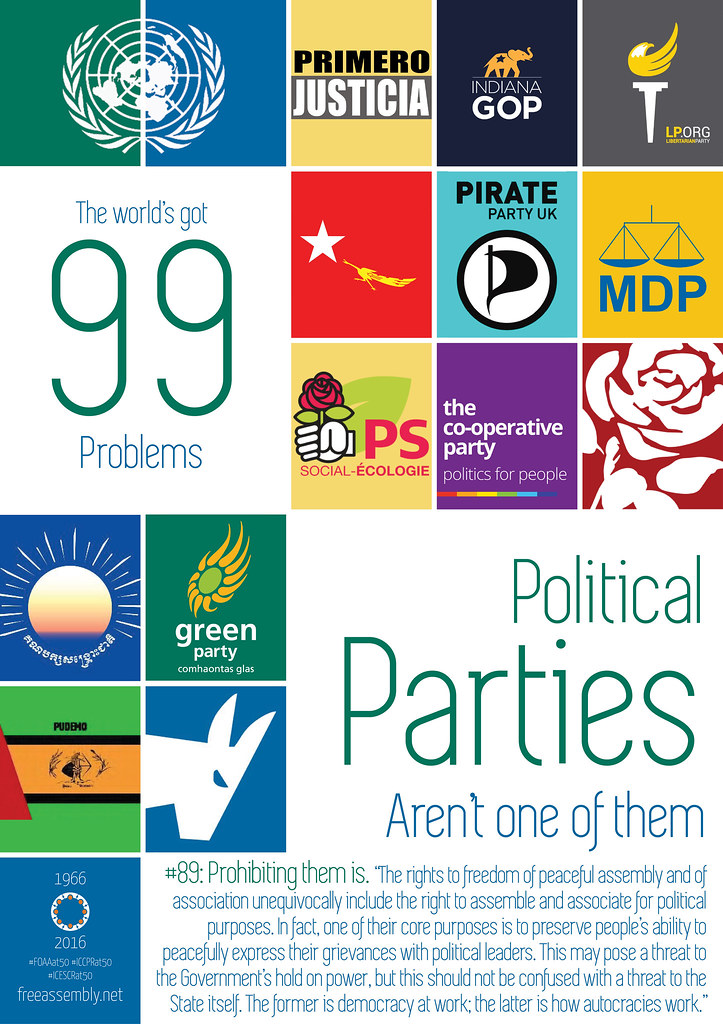
If we can for a moment contemplate constitutional change by some more conventional route, it is important at the outset to reflect on the critical role of political parties in our representative democracy. Whatever your misgivings about party politics may be, the generally accepted wisdom on the matter is that an assembly of individuals, elected outside the disciplines of a party system, would create an unruly and fractious mob, a parliament of crows, cawing a great deal but in policy terms achieving little.
The obligation of political parties to present a coherent programme to the electorate ensures that each party, before it enters the arena and starts bothering the public, agrees a set of priorities, offers a manageable set of policy proposals before an election, and provides an element of quality control over the candidates who are presented.
The constituency link
Oh yes, and then there is the importance in UK politics of constituencies which ensure that every part of the country is represented by its own MP. Whilst many systems of PR have a similar constituency element, this typically, as in the case of the electoral system used for the Scottish Parliament, requires division of elected representatives into two distinct categories, those who represent constituencies and those who represent much larger regions. Supporters of the FPTP status quo are frequently loud in their condemnation of this outcome and insist that there being two distinct categories of representative is problematic. But is this really a flaw at all? Or even as inevitable an outcome as the PR naysayers would suggest? Single Transferable Vote, for example, used for Scottish local government elections, has multi-member wards which would appear to offer a rather satisfying range of choice to their electorate, with councillors under some pressure to compete with one another to offer the best service. This is also the system used to elect the members of Dáil Éireann, the Parliament of the Irish Republic.
Still, though many countries appear to achieve both prosperity and stability using a variety of proportional electoral systems, we should not pretend that systems of PR have been an unalloyed success.
The Weimar Republic
Following the slaughter of the First World War, a defeated Germany, burdened by the reparations imposed at the Treaty of Versailles, embarked on its post-war journey within the framework of a new constitution and a new electoral system. Though there are many factors which may be implicated in the subsequent rise to power of the Nazi Party it is difficult to entirely absolve the electoral system from blame. As Wikipedia records:
This system, intended to avoid the wasting of votes, allowed the rise of a multitude of splinter parties, many of which represented the extreme ends of the political spectrum, which in turn made it difficult for any party to establish and maintain a workable parliamentary majority. This factionalism was one contributing factor in the frequent changes in government. Shirer cites the presence of some 28 political parties in the 1930 national elections; Otto Friedrich cites 40 different groups in the Reichstag in 1933. [6]
Most modern systems of PR employ thresholds as a means of preventing parties with only marginal support from winning parliamentary seats, but even had such thresholds been present in the Weimar system, it is clear that this would have been no obstacle to the growth of the Nazi Party which had the dubious benefit of party discipline when all around it other parties were in turmoil and schism. The Nazi Party never in fact achieved majority electoral support but in the 1932 election did form the largest grouping in the Reichstag. In 1933 Adolf Hitler was appointed Chancellor and having taken this position of power was able to subvert the Weimar Constitution and overturn many of the civil rights which were enshrined in it.
The break-up of politics into a multitude of parties, even where it does not result in so cataclysmic an outcome, remains problematic, presenting the electorate with an impossible set of choices and following the election, frequently resulting in difficulties in building governing coalitions. Where such coalitions depend on marginal parties for their hold on power, governments are liable to be unstable and elections frequent. There are many examples, however, which contrast with the story of the Weimar Republic, where PR has produced stable governing coalitions, often held together by a single leadership over a succession of elections. Angela Merkel, for example, was Chancellor of Germany from 2005 until she stood down following the election of September 2021.
Choosing a system
The title of this essay suggests an aspiration to set out “a vision for the renewal of electoral and party politics” but any political vision of significance must be built on something more prosaic. What kind of system will work best for the United Kingdom?
There are already a number of possible answers to this question in contention: the Liberal Democrats, for example, have consistently advocated Single Transferable Vote[STV] with multi-member constituencies. STV is already used in Scottish local Government elections. The Additional Member System is used for elections to the Scottish and Welsh Parliaments, also in Germany and New Zealand. The Jenkins Commission, set up in 1997 by the newly elected Labour Party government with support from the Liberal Democrats, recommended a system for the UK called Alternative Vote Plus, but this has never been adopted anywhere in the world. Of these three systems, the Electoral Reform Society [ERS] definitely gives its top marks to STV in terms of proportionality of outcome and its offer of voter choice and local representation. But perhaps we can do better and with this thought in mind I will outline a further option which I believe has similar strengths but in addition a potential to deal effectively with some of the key challenges in our political union. This is a bold claim but is certainly the aspiration of the proposals that follow.
The proposed system offers a single transferable vote, but within a framework which gives primacy to the role of political parties. For this reason I call the basic system STV Party Plus. As will become apparent, the proposed system includes some additional features particular to the United Kingdom context, and to make this clear I will refer to it as STV Party Plus [UK]
STV Party Plus[UK]
The particular version of STV Party Plus [UK] outlined below is intended for the United Kingdom Parliament alone and not for use in the Scottish Parliament or the Welsh Senedd or local government. The bullet points sketch the main features of STV Party Plus [UK], but to be clear: these proposals are a template intended for consideration alongside other possible systems. Some aspects of the proposed system are discussed in greater detail in endnotes [7a-7g]
- STV Party Plus [UK] is constituency based, that is to say, there would be as many constituencies as seats in Parliament, though these seats would be allocated by a different process than under FPTP.
- Each party would be entitled, though not obliged, to put forward a single candidate in every constituency.
- Where a party does not field a candidate in a constituency the name of that party would not appear on the ballot paper for that constituency.
- A vote for a candidate would also be regarded as a vote for the party of which that candidate is a member.
- Completion of a ballot would involve numbering candidates in order of preference, with freedom to number to the extent of candidates listed. [7a]
- Candidates who are not members of a party, that is to say, independents – could stand, perhaps to draw attention to a local issue, but would have no chance of taking a seat in Parliament.[7b]
The first stage of counting establishes a national tally of first preference votes for all of the parties participating in the election. A number of filters are then applied.
Counting and filters
- The first filter removes from contention all secessionist parties. This step could not be justified without a compensating provision that, where secessionist parties are able to win the popular vote within their own borders, this should be a trigger for an independence referendum.[7c] Secessionist parties would continue to be elected to the the Scottish Parliament and the Welsh Senedd. Clearly, however, their presence within the UK Parliament, the purpose of which is to provide optimal government for all parts of the union, is problematic and an obstruction to the formation of governing coalitions across the full range of policy, so for this reason they would be denied the right to occupy seats in the UK legislature.
- The second filter to be applied selects the leading five parties who go forward to the next stage.
- The second preferences of those voting for other parties [including secessionist parties] are then added to the tally for the leading five parties, with the possibility of third and fourth preferences etc. being similarly allocated.
- Where someone votes for a single party which does not succeed in qualifying for seats, and that voter does not attempt to use their preference option, their first preference vote is nevertheless counted and published together with all of the other voting data. [7d]
- At this stage a third filter could be applied if any of the five parties has fallen short of 5% of the popular vote. In this event there would be a second re-allocation of votes to the remaining 4 parties. [7e]
On the basis of the tallies which arise, parties are awarded a corresponding proportion of the seats in Parliament and candidates matched to constituencies.[7d]
Reforming the House of Lords
There exists an opportunity in STV Party Plus[UK] and doubtless in some other systems of PR, to integrate reform of the House of Lords in a manner which blends the idea of a democratically elected second chamber with a system of nomination by parties.
The strength of a nominated chamber is that, at its best, it can bring in expertise and experience from outside the political sphere, which, through the scrutinising process, can help to improve the drafting of legislation. In particular, a nominated chamber may include many people who are not politicians, and have no wish to be politicians. On the other hand, a nominated chamber such as our current House of Lords lacks democratic accountability and there is little confidence, so far as the public are concerned, that its members have earned their place in a fair and open process.
The reform proposal in this case is that before an election each party would present a list of possible candidates for the second chamber. Following the election the seats in the second chamber would be filled from these party lists in proportion to the tally of first preference votes each party gained in the election. Parties not represented in the legislature would be represented in the second chamber. Nominations from secessionist parties would also be eligible for seats in the second chamber. [7e]
Whilst the current zeitgeist favours a directly elected second chamber, advocates of such an approach should consider the probability that direct elections would generate little public interest and would create another tier of politicians, not something the public is likely to welcome. Turnout for such second chamber elections would almost certainly be low, immediately undermining the democratic legitimacy of those elected.
Proportionality, voter choice, local representation
The Electoral Reform Society suggests three criteria by which one may evaluate voting systems: proportionality; voter choice; local representation.[8] STV Party Plus [UK] is designed to perform well on each of these criteria but has additional strengths in encouraging party cohesion, offering a manageable set of choices to the electorate, ensuring that every vote can count, and delivering a legislature in which, following an election, the task of forming a government has a high probability of being straightforward and based on options which will be transparent and likely to reflect compromises which the electorate itself can easily accept.
The exclusion of parties which do not seek to develop a profile across all of the nations of the union, regardless of their first preference support in an election can, as previously stated, be justified given the provision that in any nation or region in which secessionist parties establish a clear majority of first preference votes, an independence referendum will be triggered.
Northern Ireland
In 1921, following the Irish War of Independence, Ireland was partitioned into the six counties of Northern Ireland, which were to remain British, and the Irish Free State which was to become the Irish Republic. The newly established Stormont Parliament in Belfast together with Dáil Éireann in Dublin, were provided with a Single Transferable Vote system for elections. This continues to be the voting system used in the Irish Republic. However, in 1929, the Stormont Parliament passed the House of Commons (Method of Voting and Redistribution of Seats) Act (Northern Ireland). This in effect removed STV and replaced it with FPTP. More particularly, it entrenched the power of the dominant Unionist party and defended it from the threat of “working-class independent unionists and the Northern Ireland Labour Party.” [9] It is impossible to prove that, had STV remained in place, a more consensual politics would have gradually emerged in Northern Ireland and much of the tragedy of what took place in the latter part of the twentieth century have been avoided. The reality which played out, as Tom Paulin points out in his poem, “Of Difference Does it Make” was that only a single bill proposed by a non-Unionist Party, the “Wild Birds Act of nineteen-hundred-and-thirty-one” was ever passed in the 50 year history of the first Stormont Parliament. It should be no surprise that the “Mild and patient prisoner pecking through granite with a teaspoon” to which Paulin’s poem refers, was eventually to be overtaken by darker forces.[10]
Since the Good Friday agreement, STV has been restored for elections to Stormont and there are some signs, (e.g. the emergence of the Alliance and Green Parties), that this is beginning to break down the old sectarian voting patterns. Any system of PR for Westminster elections would bring benefits to the politics of Northern Ireland, but STV Party Plus [UK] would, of course, offer a particular challenge to Ulster unionism which over the years has been overwhelmingly parochial and, despite frequent demonstrations and proclamations of loyalty, not at all concerned with being a full participant in the government of the United Kingdom.
Under STV Party Plus [UK], the Conservative, Labour and Liberal Democrat Parties would field candidates in Northern Ireland to offer policy platforms to citizens whose opinions might otherwise be disregarded. Currently there is little incentive for them to do so, given the domination of Northern Ireland’s politics by parties with either a nationalist or an entirely parochial approach which has no appeal elsewhere in the UK. All the main UK parties could, however, expect to pick up second preference votes in Northern Ireland. In some cases Northern Irish parties might choose to affiliate with UK parties — most likely the UUP with the Conservative Party and the Alliance Party with the Liberal Democrats. The Labour Party could expect to pick up second preference votes from the SDLP and perhaps also from Sinn Féin, but would undoubtedly attract some unionist second preference votes as well. In general, additional voting options, whilst not necessarily being universally welcomed, would be of benefit to the politics of Northern Ireland itself.
Political culture
STV Party Plus [UK] is clearly a system designed with some of the quirks of UK politics in mind, but also aspires to shore up some of the weaknesses frequently identified in proportional electoral systems. However, the main selling point of PR systems in general is fairness, making every individual’s vote equal in value, with an equal potential to influence the outcome of the election. There are good reasons to suppose that with a fairer electoral system — and this need not necessarily be STV Party Plus[UK] — our politics would quite simply work better. Political parties would respond more quickly to changing circumstances, develop policies for the long term and be more responsive to new ideas. What is more, our politicians would speak more plainly, and be less inclined to dodge the tough questions.
How could what is fundamentally a simple change in the way we choose our political representatives, lead to such a profound change in our political culture?
In our current system, which entrenches the dominance of just two parties, ambitious politicians, aspiring to be influential, more often than not opt for one of these two parties rather than another which would more accurately fit with their views. The result is that different factions within these two parties struggle to control the party message whilst at the same time denying that there are differences of any significance in contention. No wonder the public becomes confused and frustrated. Allowing more parties to have a real opportunity to participate in government would gradually result in a better alignment of politicians with parties and greater clarity as regards what each party, and each politician, stands for.
FPTP is often referred to as a “winner takes all” system and this too is a problem. Parties cannot risk setting out the case for difficult policy positions: arguments in favour of prison reform as against the easy appeal of advocating harsh sentencing; arguments in favour of a diverse school curriculum as against concentrating on core skills; arguments in favour of spending generously on the public realm as against lowering taxes: etc. etc.
In a proportional system, parties are more likely to make the difficult arguments in the knowledge that they can build their support over the long term and nevertheless expect to have influence, either in government or in opposition, in the short term. Equally, if a party sees that it is gradually losing support and falling behind other parties, it will still have the clear option of reinventing itself to avoid being replaced by a new kid on the electoral block.
I do not say this change in culture would be an instantaneous consequence of the introduction of PR. It would take a little time, but it would happen. Above all, and of particular importance to the future of the United Kingdom, parties will come to understand that votes can be won and lost in equal measure in every constituency and every part of every constituency. The parties which can best establish themselves will be those who develop policies with every part of the country in mind and campaign effectively in every part of it.
Reality bites
But perhaps I am getting a little carried away. All this is surely nothing more than a pleasant reverie on what the sunlit uplands of democracy might look like and I must return to the gloomy reality that, if not an improbable alignment of the planets, then at the very least an improbable alignment of political forces will be required to bring about any such transformation.

And yet there can be no doubt that the turmoil through which our politics has passed in recent times may be the harbinger of great change, perhaps for worse, but why not just as likely, for better: those who hope for better, perhaps STV Party Plus [UK], perhaps some other plan of reform, must come together and make it happen. Given the strains that are currently pulling the Union apart, no reform can guarantee that the UK will hold together; however, should the Union lurch onward without reform, we can be sure that for the foreseeable future, it will be a Union of disaffection and dysfunction, a Union considerably less than the sum of its parts.
Endnotes and References
[1] Wikipedia: Parliamentary Franchise in the United Kingdom https://en.wikipedia.org/wiki/Parliamentary_franchise_in_the_United_Kingdom_1885%E2%80%931918
[2] Wikipedia: Representation of the People (Equal Franchise) Act 1928 https://en.wikipedia.org/wiki/Representation_of_the_People_(Equal_Franchise)_Act_1928
[3] Wikipedia List of political parties https://en.wikipedia.org/wiki/List_of_political_parties_in_the_United_Kingdom
[4] Wikipedia: Conservative DUP agreement
https://en.wikipedia.org/wiki/Conservative%E2%80%93DUP_agreement
[5] Results of the UK General Election
https://www.bbc.co.uk/news/election/2017/results
By contrast with the DUP’s 10 seats for 0.9% of the national vote, the Green Party won a single seat as reward for 1.6% of the national vote.
[6] Weimar Constitution
https://en.wikipedia.org/wiki/Weimar_Constitution#Weaknesses
[7] Further discussion on STV Party Plus [UK]-UK and a second chamber.
[7a] Preference voting. A citizen is free to leave candidates unnumbered, or to vote for a single candidate, if they believe no other candidate deserves their endorsement. In practice and to ensure their vote counts, numbering 2 or perhaps 3 candidates would be sufficient in most cases. In the perhaps unlikely event that someone allocates their first second and third vote to parties which are not represented in the top five, then if they have made a fourth preference vote for one of the top five parties, this vote is added to the tally for the party in question, and so on. All voting data is published as it is understood that this may be helpful to parties in building coalitions.
[7b] Independent Candidates. The Electoral Reform Society considers the freedom which STV offers to independent candidates to win seats in Parliament to be a strength of the system. This view is largely a legacy of a system [FPTP] dominated by two parties, where independent candidates have often been considered a breath of fresh air in Parliament. For all their quirky appeal however, we should not forget that an independent candidate represents a party of one, a person unable to ally with others or unwilling to be open about their allegiance. With PR we will have genuine multi-party politics and one of the key challenges to the system is ensuring that a] the party system is stabilised and b] that parties are willing to work with one another. Independent candidates are an impediment to this process, and so not to be encouraged. Independent candidates would be able to stand should they wish to draw attention to a particular local issue. Because of the preference based voting system, constituents could vote for an independent, registering their support for his or her particular concerns, whilst still being able to use their additional preference votes for candidates with a realistic chance of winning a seat.
[7c]The point of the proposed reforms, naturally, is to make it less likely that any nation or region, for that matter, would wish to secede from the UK. It is assumed that any avowedly secessionist party does not in fact aspire to be part of the Government of the United Kingdom, but to establish a majority in favour of secession within their border. Sinn Féin, indeed, adopts an abstentionist policy, sending no MPs to Westminster. Those voting by first preference under STV Party Plus [UK]however, will have the option to use their additional voting preferences to favour a party which does aspire to govern the UK, and should be able to identify such a party with a similar policy platform to the secessionist party to which they have given their first preference vote.
A popular vote in favour of independence, as has been stated above, should trigger an independence referendum which would allow the case both for and against independence to be properly made during the referendum campaign.
So far as a border poll in Northern Ireland is concerned, the arrangements put in place by the Good Friday agreement would continue to be the criteria applied.
[7d] The second filter – the five parties with the strongest support go forward to the next stage. The question may reasonably be asked, why select five parties only? The figure could easily be more or less than this. This is clearly a matter which deserves some consideration, but the number of parties should on the one hand offer an adequate range of choices to the electorate, and should be able to give fair representation to single issue campaigns which might in a more open system give rise to single issue parties. A further consideration is to offer options for government formation. Five parties allow for more possible coalition partners than would three or four, and this could make it more possible for coalition agreements to reflect trends evident in the data arising from the election. It should also be clear that the system allows for an unlimited number of parties to stand for election and to be one of the five represented in parliament.
[7e] If one of the five parties selected by the previous filter has less than 5% of the popular vote, [including the preference votes amassed] they win no seats and the preference votes of those who had supported them would once again be reallocated. Given that there would already be a fairly strict management of party numbers in Parliament it is reasonable to ask if the 5% filter Is really necessary? It is a matter for discussion obviously. A 5% filter is used in New Zealand and Germany for example.
[7f] Matching of candidates to seats. Having been allocated a number of seats in the Parliament, a party would order their candidates according to the percentage of the vote they had won in the seat in which they were standing, those with the highest percentage having the first claim on a seat. In a proportion of seats, the process of matching will not be quite so straightforward as in the case of a FPTP election but given that the number of seats and the number of candidates will be equivalent, a match will be possible. Some parties will have been awarded seats on the basis of widespread support, rather than the concentrated support which would normally be required to win a constituency. These seats would be allocated at the tail end of the process, using two criteria.
- That they are the highest constituency votes as compared with other candidates standing from the same party.
- That where possible a successful candidate should be allocated the constituency in which they stood, and where not possible, [because that constituency is already occupied by another party with a higher vote and a stronger claim, they should be allocated a constituency as close as possible to their original constituency.]
There is an aspect of the seat matching process where I would have to admit that a mathematician will be much better qualified to provide a formula which can be applied when the fair allocation of a seat is not obvious.
It should be remembered when considering this method of allocating seats, that under the FPTP system, there are frequently split votes which mean that the winning candidate has the support of less than half of those who voted, and in the case of a four or five way split there is the possibility of a candidate winning a seat on the basis of very low levels of support within the constituency. It is understood that one of the jobs that a constituency MP must take on is to listen to and represent all of their constituents, regardless of how they voted. One of the clear benefits of this constituency model is to share out the workload of MPs fairly, in a manner which it may be argued, systems which rely on regional lists to achieve proportionality, cannot do.
[7g] Further discussion of a second chamber. To be valid, second chamber lists would have to be published before the election in sufficient time for them to be properly scrutinised by the press and interested members of the public. This would result in a second chamber with clear democratic accountability and would, in addition, offer a place in the national debate for voices beyond the 5 largest parties present in the legislature.
Lists, naturally, would have to include more than just candidate names. A clear statement of each candidate’s experience, expertise and general suitability for the job would be published. Whilst not every member of the public would be interested in scrutinising these lists, we can be sure that they would generate another dimension of debate by which the qualities of a party could be assessed.
Gordon Brown has suggested a second chamber of the regions and the nations, with some resemblance to the American Senate. It would be a simple matter for parties’ nominees to be chosen and grouped at a regional level. This option has been discussed elsewhere on this blog in an essay titled: Time up for the House of Lords, and an end to “nostalgic deference
[8] Electoral Reform Society – system evaluation according to 3 criteria
[9] Replacement by Stormont Parliament of STV electoral system by FPTP https://en.wikipedia.org/wiki/House_of_Commons_(Method_of_Voting_and_Redistribution_of_Seats)_Act_(Northern_Ireland)_1929
[10] Of Difference Does it Make – Poem by Tom Paulin http://www.troublesarchive.com/artforms/poetry/piece/of-difference-does-it-make
Acknowledgements
Thanks to Elaine for help with proof reading, advice and comment. The final product, including errors, are mine.

 Carruchan
Pingback: Giving Keir Starmer a (gentle) shove… | Carruchan
Pingback: Sunlit uplands revisited | Carruchan
Pingback: The Curse of Small Political Parties | Carruchan
Pingback: Unclubbable | Carruchan