Why and How the UK Can and Should Invest Now in Grid-Upgrade and Solar Power
The national debt is a perpetual and festering sore in any discussion of our economy. The more we borrow, the heavier the millstone we pass on to future generations. Yet, without taking on more debt, we find ourselves trapped in an austerity riven with inequality—a situation that seems unjustifiable in a world where a small number enjoy improbable riches. Some economists argue that taxing the rich is not only a just measure but would stimulate growth. The idea, however, has not gained enough traction with the public in recent times. There is a lingering fear, stirred up by segments of the conservative media, that punishing the rich would risk stifling the very individuals who drive economic growth.
Economics can seem like a strange blend of superstition, alchemy, astrology, and religion. Consider the financial crash of 2008. Only a handful of economists saw the tidal wave coming. Even Gordon Brown, who is credited with orchestrating the rescue package, admits to mistakes in the lead-up to the crisis. Given his expertise, it’s reasonable to assume he understood the risks posed by the financial products flooding the market. While they made many wealthy, they contributed little in the way of meaningful goods or services for ordinary consumers. I suspect Gordon knew a crash was inevitable—he just didn’t know when it would arrive and hoped it wouldn’t happen on his watch. But it did.
Since the financial crash of 2008, our economy has grown at a slower pace, while national debt has increased significantly. Is this debt burden really a necessary evil, or a symptom of deeper failures of vision and economic policy?
Dharshini David, the BBC’s Chief Economics Correspondent, hosted a very penetrating radio programme summarising The Story Behind National Debt. She interviewed a series of luminaries, beginning with Sir Robert Stheeman, former Chief Executive of the UK Debt Management Office. It has been his job to organise the auctions which sell government bonds—also known as gilts—that are used to provide the finance which makes up our national debt.
Apart from explaining these technicalities, Sir Robert had a number of striking things to say about the inscrutable character of government debt. Just to begin with: it is “utterly different to every other kind of debt.” It is “all about credibility.” It’s not just about the numbers. In the context of Covid, huge sums were borrowed—but he said, “That was relatively easily absorbed…the market was willing to give the Government of the day the benefit of the doubt.” In this statement the role of “the market” i.e. primary and secondary traders in bonds, can be seen as crucial. If the markets don’t like what is happening that spells trouble for the government. At a later point in the programme Sir Robert says he doesn’t know whether we are approaching the limits of debt—“Nobody does!” He goes on to say that he does not think increasing debt is sustainable and concludes: “Something may have to give.”
I’d like to focus for a moment on the importance of credibility. What Sir Robert is saying is that if government debt is used to finance investment that is in the clear and immediate interest of an economy then investors will recognise this. They will see their investment as secure. Sale of bonds to finance the investment may be possible on the back of a credible plan, one which will clearly lead to increased growth and productivity.
Thinking about the current situation of the UK for a moment, it is clear that some infrastructure investments have been bedevilled by delays and cost overruns. Inevitably, this has undermined their credibility. HS2 was one such infrastructure black hole. There are signs that a third runway for Heathrow could be another. It will take years to complete, is likely to meet with consistent opposition and to cost vastly more than was first supposed.
Perhaps that is an unnecessarily gloomy projection but the point in this case is that the bond markets will almost certainly be influenced by that gloomy view of the matter. The Labour Government has been attempting to mitigate this problem in the case of new nuclear power installations. A range of measures has been introduced to facilitate the construction of Small Modular Reactors. Given the nature of the technology it is hard not to see a few pitfalls along the road to completion.
While large-scale infrastructure projects like HS2 face challenges, smaller, more innovative investments—such as solar energy—offer immediate returns and greater credibility. One of the panelists on a recent addition of Sunday with Laura Kuenssberg, Greg Jackson, CEO of Octopus Energy, spoke admiringly about the way China completely turned around the air quality of its big cities with the introduction of electric vehicles. 59% of cars on the streets are now electric. This has been made possible because China is surging ahead with the installation of solar panels. In 2023 alone, explained Greg Jackson, they “added more solar energy than the entire installed capacity of the United States.”
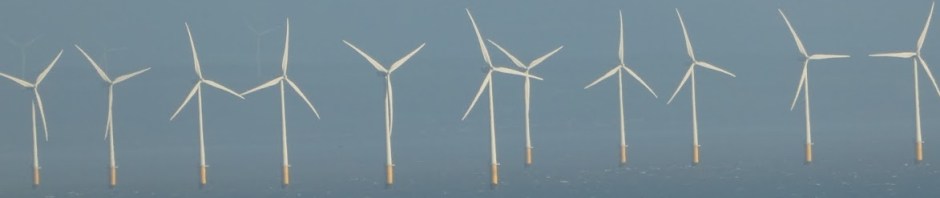
I might not have thought installation of solar panels was an obvious route to go down in the UK. It is the installation of wind turbines which has most captured public attention but there have been obstacles to development at every turn. Tom Heap, however, in his book Land Smart: How to Give People and Nature the Space to Thrive makes it clear that there is huge and immediately available potential for roll out of solar in the UK. Many of the ideas he suggests are innovative, but they are far from untried. Exploitation of warehouse roofing, building solar panels over car parks, floating solar on reservoirs, and so on.
Solar panel technology already exists and is coming down in price. In the examples Tom Heap suggests, space is already available and installation unlikely to prove controversial. The principal obstacles are complicating factors of ownership relative to the spaces concerned and also the need to upgrade our electricity grid to make it compatible with developing renewable capacity.
An increase in the pace of solar installation and improvements to our electricity grid could begin immediately. Further development can happen incrementally, and as logistical problems are solved, with increasing rapidity. The contribution to bringing down energy costs and insulating our economy from the vagaries of imported oil and gas are undeniable. The clear potential of such investment to lower UK production costs and to make output more efficient is what would provide the necessary confidence for investors to purchase government bonds to cover the costs. But I have a different suggestion.
There is another way to raise finance for a project which is so manifestly in the interest of the United Kingdom. The Government could use quantitative easing—a process where the central bank purchases assets to inject money into the economy—effectively creating new money.
The importance of this capability is greatly under discussed, because it is inclined to seem like a kind of dangerous trick which may be played by a government. Certainly, quantitative easing has the potential to be inflationary and if done for frivolous purposes is dangerous. Even talking about quantitative easing is liable to undermine confidence. However that fear of QE is at least in part promoted by economists who believe that deregulation of markets is the solution to all problems.
By “frivolous” use of QE I mean, for example, spending on day to day expenses, such as, f giving nurses a decent pay rise – obviously very tempting. To do so in a time of economic stringency is going to undermine the aforementioned confidence of investors and so the international markets would not treat the pound well. Its value would fall, and less money would flow into the UK economy—bad news all round.
However, if quantitative easing is used for investment in needed infrastructure then this has the potential to build confidence. Upgrading our electricity grid and building more renewable generation will obviously secure the energy resource in the UK, make it less vulnerable to international fluctuations in the oil price etc. The outcome will be to make the UK a place in which investors can invest more confidently.
This strategy of injecting money into the economy was first suggested by John Maynard Keynes. It was he who laid the theoretical foundation for President Roosevelt’s New Deal. This investment lifted the US out of the economic slump of the 1930s by organising and providing funds for the building of “useful works such as government buildings, airports, hospitals, schools, roads, bridges, and dams.”
Keynes‘ legacy has taken something of a beating since his death soon after the 1944 Bretton Woods conference. Bretton Woods was profoundly influential in establishing the economic world order and US dominance in it, following the war. Keynes did not entirely get his way at Bretton Woods but his opponents fought back in any case and growing belief in an unregulated free market as the solution to all problems established a dominance beginning in the 1980s. Keynesian principles saw a resurgence after the 2008 financial crash, as governments turned to stimulus spending to revive their economies. This did not prevent austerity policies and a desire to cut taxes dominating UK Government policy while the Conservative Party held power.
Yet there are economists out there who continue to insist that a government with control over a sovereign currency, such as the United Kingdom, can do more in the interests of its citizens than cut taxes and expenditure in order to stimulate growth. Professor Stephanie Kelton makes a powerful case for a different approach in her book The Deficit Myth. She was a senior economic adviser to Bernie Sanders in the 2016 and 2020 presidential campaigns. Another strong voice proclaiming the unused potential of our currency is economist Ann Pettifor who explains in her book The Production of Money, “how to break the power of bankers” and has explicitly made the case for a Green New Deal. Whilst these ideas remain controversial, the Keynesian fundamentals have a strong track record which could be particularly well fitted to the needs of the present moment.
As I write these words, the Chancellor of the Exchequer for the United Kingdom, Rachel Reeves is coming under pressure for alleged misdemeanours relating to her previous career. It is suggested that she has exaggerated in her CV the amount of time she spent working at the Bank of England. My concern however is that she spent too long working there and has become possessed by its orthodoxies. I have no serious doubts about her integrity or ability to do her job. She seems to me to be both formidably capable, well-intentioned and, above all, possessed of unshakeable self-belief. However we are at a moment when the need for decisive and immediate investment in our renewable energy infrastructure is an obvious way to reinvigorate our economy.
If our Chancellor is unwilling to act, she should step aside. The choice is clear: invest now or burden future generations. The tools—debt or QE—are available, but the political will must match the urgency of the moment.
Endnotes
Guardian 2010 – The weekend Gordon Brown saved the banks from the abyss
BBC News 2011 Gordon Brown Admits Mistake
Wikipedia Roosevelt’s New Deal
Gov.UK Government rips up rules to fire-up nuclear power
Tom Heap Land Smart: How to Give People and Nature the Space to Thrive
BBC News 14 February 2025 What we’ve learned about Rachel Reeves’s expenses – and the Labour response
Stephanie Kelton The Deficit Myth
Ann Pettifor The Production of Money: How to Break the Power of the Bankers

 Carruchan
This should be given to all politicians. Miller Miller Caldwell MA FFICS The Stolen French Barrow is now published.www.millercaldwell.com