A reflection on teachers, missionaries and poets, given as a talk to St. Michael’s Church Burns Club, Tuesday 4th December, 2018.
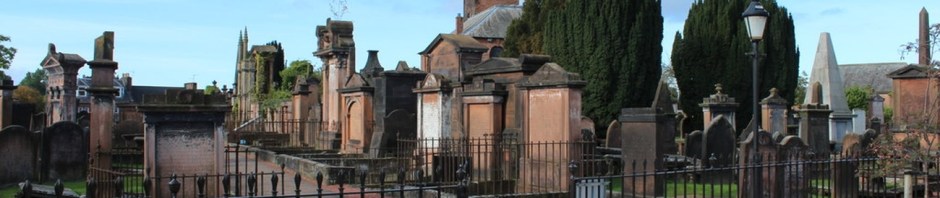
Header image, adapted from St Michael’s and South Parish Church Graveyard, Dumfries – Billy McCrorie
My Parents were both teachers. My Father taught Mathematics whilst my Mother, before she was married, had worked as a primary school teacher in the Republic of Ireland. When she came to the North, and her family were grown, she once again wished to teach, but she could not resume her career, as her qualification was not recognised.
Unsurprisingly I was encouraged to see University as an appropriate ambition, though my parents were keen to assure me, and my two elder brothers, that I would be valued regardless of my academic successes or failures. As things turned out, I made good – though not brilliant – progress, in my passage through Primary and Secondary Schools, before going to Reading University, to take a degree in Sociology.
Quite early in my secondary school life, a number of ideas formed. In my evolving worldview, education had high value, and I was clear that an understanding and appreciation of arts, sciences, music, poetry and philosophy would contribute something important, if not vital, to my appreciation of and success in life.
And yet; my actual experience of education did not inspire. I lived for the sound of the bell which would release me to play football, and for the long summer holidays, which I loved.
As I looked around me at the response of my classmates to their educational offer, it seemed broadly similar to my own. Though some were good at it, nobody I knew truly loved learning. We knew education was important, but despite occasional highpoints, it was not something that we did for its intrinsic value.
When I compared my grades with those of others, I had the uneasy feeling that, where I was doing quite well, many others were underperforming. They seemed at least as intelligent and alert to the world as myself, but they scored less well in their exams.
In progressing to University, despite switching from the study of pure sciences to the more fashionable Social Sciences, I found my lectures less than engaging; I fell asleep in the University library over the set texts, and I struggled to complete my essays, though always submitted on time and generally got a credible grade.
In my final year, a friend, Keith, lent me a book by an American Primary School teacher, John Holt. It was titled How Children Fail, and was a revelation to me. It’s opening words; “Most children in school fail.” “For a great many this failure is avowed and absolute. Close to 40% of those who begin High School dropout before they finish. For College the figure is one in three.”
The context was of course American, but the words resonated with my own observation. Holt’s writing was simple, clear, and as I read on I could see, was based on a profound insight into the children he was teaching, and their struggles and failures to progress.
I read everything that Holt published. I became interested in the free school movement and the Summerhill experiment, where children attended class only if they wished. A.S.Neil, who founded Summerhill in 1921, was a Scot, not that that was greatly significant to me at the time. Summerhill continues to offer its remarkable model of education, to those parents with enough nerve – and money, it must be said – to offer their children the freedom which Neil so prized. Kilquhanity, founded by the late John Aitkenhead, a contemporary of Neil’s is our local version of Summerhill, less famous, but nevertheless, an institution of note. I recently encountered someone who had sent their children to Kilquhanity, who informed me that it is now closed.
Inevitably I was drawn to explore an even more radical idea, set out in the critique of professionalised education, developed by the former Catholic Priest, Ivan Illich. His book, Deschooling Society, by contrast with the writing of John Holt, was difficult both in terms of the huge challenge he made to the modern compulsory education system, but also in terms of the language and metaphor he deployed.
Illich’s first language was actually German, but he was able to write in English, French, Spanish and seemingly, to be able to acquire new languages in the way that others may acquire new clothes – as and when required.
Illich was a fascinating figure, and I wish to say something about the experiences which had formed the basis of his critique. Following his training as a Catholic Priest in Europe he travelled to New York to work amongst the newly established Puerto Rican community during the 1950s. His success in this work was noted by the hierarchy of the Church and he was chosen to lead a mission to the countries of Latin America, to those parts where the Church was not yet fully established, and the infrastructure of the church was not yet in place.
Illich though was deeply skeptical, and regarded the record of missionaries as one of cultural imperialism, an imposition made more destructive by disregard and ignorance of the indigenous culture, and arrogance born of education and membership of a culture assumed to be superior.
What then was Illich’s missionary vision? I won’t pretend to speak with authority in trying to answer this question. I think Illich believed the evangelising mission mounted by the US Catholic Church, would bring in its wake all the values of a fully developed consumer capitalism,and that this contagion,rather than the message of the Christian Gospels, would be the ultimate legacy of the enterprise, American values he appeared to believe would destroy much that was precious in the evangelised culture.
His challenge in training priests for this mission was to avoid this outcome. And so I imagine that he gave a central importance to the need for humility and the importance of respect for the culture encountered by the mission. The objective of the missionary should not be to teach, but rather to learn. At base, the role of the missionary should be to practice Christian values, but not to preach them. “The medium”, as Marshall McLuhan said, “is the message.” McLuhan’s point was that how we behave gives the context to what we say, and is in fact, fundamental to what is transmitted. People learn by example rather than by instruction.
At the conclusion I think Illich believed that both the evangelist and the evangelised could be changed for the better by their encounter, but not in ways that could be entirely under the control of either.
Though Illich had a profound attachment to the Catholic Church, we should not be surprised that the approach he was fostering proved controversial, that his originality, though supported by some of his superiors, was strongly resisted by others: eventually he felt unable to carry on, and ceased to practice as a Catholic Priest, though apparently took pleasure, on occasion, in being able to celebrate Mass, in circumstances I imagine where Church buildings and infrastructure were still thin on the ground.
I see connections in Illich’s thinking, with the Protestant reformation. We know of course that the reformation was in part a reaction against the corruption of the Catholic Church at a certain point in history. But the ideas of the Protestant revolution either were or became something more: an expression of the freedom of each individual to interpret scripture according to their own lights. The invention of the printing press by Johannes Gutenberg, in the 15th Century, was of course critical in making this a meaningful proposition, as it democratised access to the written word, and resulted in the extension of reading and education in general, with the Bible one of the first texts to be disseminated.
As we know, the history of protestantism has itself been disputatious, and in some cases, it seems fair to say, that churches developed and promulgated their own orthodoxies in ways which may have fallen short of the humility advocated by Illich in his programme to prepare missionaries.
Desertmartin is a small village in Ulster and Tom Paulin, in his poem of that name, speaks of a “plain Presbyterian grace”, and its “free strenuous spirit”, qualities which were strongly present in the Ulster of my youth. I grew up in the Episcopalean Church of Ireland, bound into a Unionist culture united largely by its suspicion of the Roman Catholic minority. My family though, coming from the south, were always to some extent outsiders, and so I find it easy to follow Paulin as he goes on to make some sharper commentary.
It’s a limed nest, this place. I see a plain
Presbyterian grace sour, then harden
As a free strenuous spirit changes
To a servile defiance that whines and shrieks
For the bondage of the letter: it shouts
For the Big Man to lead his wee people
To a clean white prison, their scorched tomorrow.
Robert Burns was a member of this Church, but I am aware that he was fond of hearing the sermons of other churches and that he “often attended the Burgher Kirk in Loreburn Street” – “as he could not abide the minister of the day in St Michael’s.”
When my interest in the ideas of Holt and Illich first developed, I naturally found myself discussing them with friends and relatives. I would have to admit that I found little real welcome for these ideas, and much skepticism. My lack of experience, in particular of teaching, was challenged, and though my experience of being a pupil seemed to me more relevant, I decided to train to be a teacher, though with some uncertainty as to whether this was really the career that I should embark on. Indeed having obtained my PGCE, I spent several years in other employments, some of which were clearly transitional, and other which offered real possible career paths. I spent a couple of years as a detached youth worker in Reading; I spent a year as a volunteer worker in a young offenders’ centre run by Save the Children in Northern Ireland. When I came to Dumfries, I found work as an auxiliary at Elmbank, a department of Dumfries Academy, for pupils excluded from schools in the west of the region. In truth, though I was not a teacher, in all of these employments, the work bore some resemblance to that of a missionary, where my role was, in some way, to imbue a positive set of values, in terms of relationships, work ethic, and character, in the young people with whom I was working. I was a part of the professional project to tame the young people with whom I was charged.
I am a long time fan of the work of Bob Dylan. Dylan dropped out in his first year at the University of Minnesota, and taught himself the conventions of the folk idiom in which he first became prominent. In his book Chronicles, he describes finding himself sometime in the early 1960s, staying in a household with a substantial library. Daunted by engagement with all this learning, he would simply open books at random, and if what he read appealed, would then engage more fully with the content. This method may perhaps help to explain the extraordinarily eclectic nature of his developing work: here’s a verse from his extended song, Desolation row:
Recording of Dylan singing:
Now Ophelia, she’s ’neath the window
For her I feel so afraid
On her twenty-second birthday
She already is an old maid
To her, death is quite romantic
She wears an iron vest
Her profession’s her religion
Her sin is her lifelessness
And though her eyes are fixed upon
Noah’s great rainbow
She spends her time peeking
Into Desolation Row
Let’s look again at four lines:
To her, death is quite romantic
She wears an iron vest
Her profession’s her religion
Her sin is her lifelessness
This is a mysterious verse in a long mysterious song; whether Dylan intends it or not, I read these lines as a sardonic comment on the way professional helpers experience a vicarious vitality from the lives that they “peek in on.”
A similar idea is alluded to in the title of a recently published book by a young Scottish writer and autodidact Darren Garvey. “Poverty Safari” describes Garvey’s emergence from a life of alcohol and drug addiction, to his current status as a successful rap artist, writer and highly articulate spokesperson for his the community in which he grew up. He first came to my notice when he appeared on the BBC Question time programme. The opening page of his book is given over to a poem, written in the Glasgow vernacular, by the Scottish Poet, Tom Leonard, and with slight reservation, I should like to read it to you in particular for its pithy perspective on the professional helper. It’s called:
Liaison Coordinator
Efturryd geenuz iz speel
Iboot whut wuz right
Nwhut wuz rang
A sayzti thi bloke
Nwhut izzit yi caw
Yir joab jimmy
Am a liaison co-ordinator
Hi sayz oh good ah sayz
A liaison co-ordinator
Jist whut this erria needs
What way aw thi unimploymint
Inaw thi bevvying
Nthi boayz runnin amok
Nthi hoossyz fawnty bits
Nthi wummin n tranquilisers
It last thiv sent uz a liaison co-ordinator
Sumdy wia digreee
In fuck knows whut
Getn peyd fur no known
Whut they fuck ti day wi it
But let us return to Illich’s critique of the school system. Illich was not attacking education per se. Indeed in the latter stages of his life he taught in universities in both Germany and the USA. However compulsory school, though offering a vision of, to use Dylan’s phrase, “Noah’s great Rainbow” was in Illich’s polemic, a loaded competition, providing a route to prosperity for a fortunate and generally privileged few, whilst persuading the remainder, that their failure to make better use of the free opportunity provided for them, was a fair assessment of their value, capability and proper place in the hierarchy of social class. This Illich referred to as “the hidden curriculum” of compulsory education.
As John Holt put it so succinctly: “Most children in school fail.”
Implicit in this statement is that “Most children” leave school with the greater part of their talents and potential unrecognised both by themselves and by their teachers.
I do not suggest that this outcome is intended, by anyone, least of all, those who work within the system; yet this stark summary continues to strike me as entirely accurate.
An instance of how this subterfuge is achieved may be seen in the way the Scottish Education system typically treats those whose mother tongue is the Scottish vernacular. The language spoken by most working class Scots is a derivative of the Scots language which Burns used to such eloquent effect. This modern vernacular has its own idioms and is frequently punctuated with an Anglo Saxon colour, a feature which I expect did form some part of the spoken language in Burn’s day.
Whilst there is genuine and worthy promotion of the work of Burns in our schools, the mother tongue spoken by many of those who attend, which they use to address their parents and grandparents, their close friends and neighbours, is treated as something unworthy of a classroom setting, a debased remnant of the language in which Burns was fluent.
As Scottish working class children enter the education system, they are hobbled from the outset, and expected, to learn to read and to express themselves in Standard English. In the contest which school sets running, it is the children from middle class families who find the way into the written word is simple and straight forward, whilst those brought up in the modern scots vernacular will find that, in their first steps in education, they will be more likely to experience stumbles and humiliation.
Writers like Tom Leonard and the novelist Jim Kelman challenge the idea that this language cannot have literary importance, but their work is too authentically a representation of the language we can hear daily in our high street, for it to be deemed, in general, suitable for educational purposes.
The world of great literature, it is fair to say, is dominated by the writing of those who have charted a successful course through their education. But there are notable exceptions. I think of Patrick Kavanagh an Irish poet, who farmed until he was thirty, and then walked the sixty miles to Dublin, to become part of the literary scene which he had, until that point, admired from afar. Here is a verse from his poem “Shancoduff” which I assume to be the name of his farm in County Monaghan, just across the Border from Newry, in Northern Ireland, where I grew up.
The Sleety winds fondle the rushy beards of Shancoduff
While the cattle drovers sheltering in the Featherna Bush
Look up and say: “Who owns them hungry hills?
That the water-hen and the snipe must have forsaken?
A poet? Then, by heavens he must be poor
I hear and is my heart not badly shaken
I think also of William Blake, the period of whose life crossed with that of Burns, but who was largely unknown in his lifetime. According to Wikipedia Blake “attended school only long enough to learn reading and writing, leaving at the age of ten, and was otherwise educated at home by his mother Catherine Blake.” I am particularly fond of his proverbs of hell. An example: “The road of excess leads to the palace of wisdom” Old fuddy duddy that I am, I feel compelled to add a cautionary note….”if it doesn’t kill you first” – but when I look at someone like Darren McGarvey and read his aforementioned “Poverty Safari” I know that Blake, though seemingly not a person of excess himself, was onto something, and did not disdain excess in those around him.. Burns was no stranger to excess. John Syme, on the second Galloway tour recalled:
“’We left Kenmure, and went to Gatehouse. ….. In a little while the rain began to fall. It poured in floods upon us. For three hours did the wild elements rumble their bellyful upon our defenceless heads. Oh, oh! ’twas foul. We got utterly wet; and, to avenge ourselves, Burns insisted, at Gatehouse, on our getting utterly drunk.”
I will finish with a little counter factual in relation to the life of Burns. Let us suppose some Ayrshire landowner had spotted the gifts of the young Robert Burns, and decided to bestow on him the benefits of an education, beyond that which he was able to afford. With his great talents we may speculate that Burns would have progressed to university, would have become prominent in his field of study, perhaps a Professor of Literature or of Philosophy. He might indeed have written poetry. He might have become famed for his rise from humble origins just as in the case of Alexander Murray, born on a sheep farm near Newton Stewart in 1775, who rose, more by his own efforts than any philanthropy, to become a Professor of Oriental Languages at Edinburgh University. Burns’ life might have been longer, healthier, more prosperous.
Had this been the course of his life, we might still memorialise him: but the entire corpus of the work we know, based so fundamentally on his lived experience, would have been lost.
i will finish by reciting just a single verse from just one of Burns’ poems. It is from perhaps his best known poem and though I do not say that it is the greatest poetry ever written, it touches me more than any other, and for this I value it more than any other.
I’m truly sorry Man’s dominion
Has broken Nature’s social union
An’ justifies that ill opinion
Which makes thee startle
At me, thy poor, earth-born companion
An’ fellow-mortal!
[from: To a Mouse]

 Carruchan
Really enjoyed that, Stephen. Now retired, I am currently undertaking a degree with the OU (for pleasure) I’m half way through the first year of A111 Arts and Humanities and probably aiming for English Lit. We’ve been analysing poetry recently and ‘To a Mouse’ is one of my favourites too. I love Ian Cuthbertson’s performance of it which he delivers as though he has just come upon the scene and tells it as a story – very moving and powerful. Worth a look: Robert Burns: The Man And His Legend (Documentary) starts at 8min 14sec https://youtu.be/e6yGVYhVM1g?t=494 Regards, Steve
Thanks for your comment Steve, and glad to hear you’re making good use of your time. I’ll look forward to watching the video, which I don’t think I’ve seen it. And by the way, since you’re studying English Literature, you might be interested in Frank Skinner’s poetry podcast. I think it’s rather brilliant. https://planetradio.co.uk/podcasts/frank-skinner-poetry-podcast/ See you at Heathhall sometime.