A Day of Protests

Below, a letter, written to the Dumfries Courier in response to an article, A Day of Protests. For whatever reason, the letter was  not printed in the succeeding edition in which coverage of the protests was included. The themes of the letter have relevance to similar protest events around the country. 

Dear Editor,

I write with reference to your article “A Day of Protests” which noted the plan “to host a ‘silent peaceful protest’ amid  concerns about groups of young male refugees around the town.” Later in your article it is said, by the organisers of this protest “that residents are looking for answers to what is actually happening  regarding immigration.”  

The concerns and objectives of this protest seem vague. I too have recently seen young migrants about the town, often in transit from the hotel where they are currently accommodated, awaiting some decision as regards their claim for asylum and  the possibility of citizenship in this country. 

I have not observed any behaviour in this group of young men which might constitute a problem, though occasionally have heard comments suggesting their presence was making some people uneasy. Needless to say, any hard evidence of poor conduct on their part will not help their claim for asylum. 

Migrant communities are always the object of suspicion and mistrust and that is to be expected, but here in Scotland this should be tempered  with an awareness of the recent history of emigration. This was a particularly traumatic phenomenon in previous centuries when poverty, famine and other upheavals were commonplace, resulting in many Scottish people leaving for America in the hope of a better life.  Like the many thousands of Irish people who made a similar journey, these migrants were not always made welcome in their new home. 

The recent Sandstone Steps exhibition in Kirkcudbright’s Mitchell Gallery touched upon the theme, and included poetry the following example being particularly to the point of this letter.

Emigrant

Fallow Wheat our farm was called

And we were harvested

one by one:

Esther two months and six days

Henrietta eight years

Lovely Jesse twelve,

their mother at thirty nine.

These beautiful sick hills!

The minister says the righteous

have a place at God’s side:

for the rest of us there’s America.

With thanks to Hugh McMillan for permission to use his poem Emigrant  in this context.  https://www.hughmcmillanwriter.co.uk/ 

Posted in Comment | Tagged , , , | Leave a comment

Football – Man and Boy

The Beautiful Game

In my middle teenage years, I had a girlfriend, Emma, but it was a short-lived affair. She was a year below me in school but, though I liked her and was grateful for her interest in me, I never really settled into the relationship and my involvement, consequently, was half-hearted. Unsurprisingly, we drifted apart. 

Part of the problem, perhaps, was that the fate of those in Newry High School who were “going steady” in the late 1960s seemed to be to spend their breaks and lunch hours standing in the school yard, lined up along the red brick wall of the old High School building, in — what seemed to me — an enchantment of mutual admiration. I really couldn’t visualise myself in this amorous company and was mystified as to how this practice could be sustained over months, if not years. But there was, so far as I was concerned, a further problem with the wall of love: lunch hour was for football.  

It was the chance of a game before school which got me there early most days, and the opportunity for a further game at the end of the day which kept me late most evenings; but that was clearly not enough, and I was unready to sacrifice my lunchtime to anything other than football. Football — soccer that is — occupied a unique position in the culture of Newry and District for it was not an official game in any of the schools, whether Catholic, where Gaelic football and hurling were played, or state schools, such as Newry High School, where the official sports were rugby and hockey. I’d played both of these in my first year and opted for hockey, which I enjoyed; but my first love was “the beautiful game”.  

My passion for the game was a common one amongst my friends and so we sought opportunities for a more organised expression of this shared interest. This we found in the Carnbane League, a phenomenon of voluntary organisation worthy of an OBE, though I suspect that those who might have been offered the award, would have felt it necessary to decline it and the accompanying trip to the palace.  

My friends and I entered teams in the appropriate age groups in the Carnbane League over several seasons. The sides that I played in were conspicuous only by their lack of success. The team names in general were like those I see listed today: Camlough Rovers; Rossowen Celtic; Millburn United. On one occasion I persuaded my friends to enter a team under the name of River Plate, which I knew to be one of the top Argentinian teams. I knew nothing about them, but I was very taken with the ring of the name. It must have been a knockout competition, for I remember playing only one game as River Plate in which we were well thrashed, 6-1. In this particular match, however, somewhat to my own astonishment and late in the “second moiety”, as the man from the Newry Reporter would surely have recorded the moment — had he been present — I shimmied past a couple of players and slotted the ball into the corner of the net for our only goal. I watched the Newry Reporter very closely that week on the day it came out, to see if the panel who awarded “goal of the week” had heard of the glories of my own effort. Apparently, no one had seen fit to pass on the good news.  

The fact that football has such a strong cross-community profile in Northern Ireland made it all the more mystifying to me that the national soccer team was, and continues to be, divided, a Northern Irish team and a team for the Irish Republic. This does not mirror the situation in other sports such as rugby and hockey, where a single team represents the island of Ireland. In my teenage years, this was a matter of distress to me. In the late 1960s and early 1970s, George Best was indisputably the greatest player in the world. Newry’s own Pat Jennings was a goalkeeper — the Newry Reporter would have called him a “custodian” — in the very top rank. It seemed obvious to me that if we could just add John Giles of Leeds United and the Republic of Ireland, we would have a midfielder of world class who could stitch the whole team together. With these three very great players and the best of the rest, there was no doubt in my mind that — to paraphrase Marlon Brando in On the Waterfront — “we coulda been contenders.” I don’t just mean that we could have got to the final stages of the World Cup; this was a once in a thousand-year opportunity for a small nation to go all the way, squandered, as far as I could see, on the altar of an archaic squabble.  

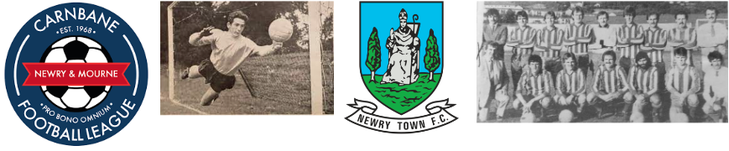
A Legend in Blue and White Stripes 

In August 1983 my eldest brother Michael and I set off to watch a pre-season friendly between Newry Town and Shamrock Rovers. As a teenager I had occasionally joined the small crowds which went to the Showgrounds to watch the Town play. Regardless of their lowly status in the B-Division, I knew that my footballing talents would never win me a place in the team but that didn’t prevent me from daydreaming occasionally that I might become their manager and lead them to promotion to the Irish League and then eventually glory in Europe — but let’s not get carried away with this fantasy.  

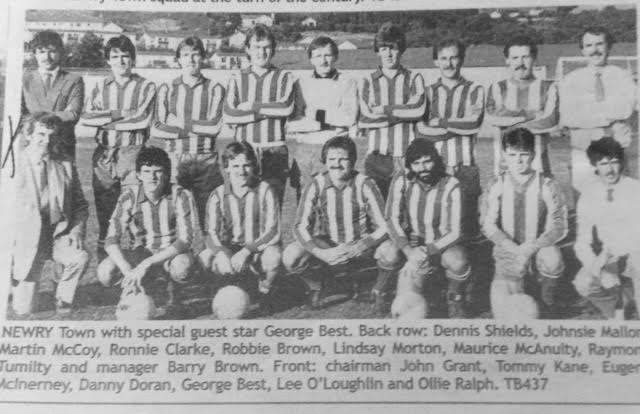
The real thrill of the match in question was that, in the twilight of his career, George Best had been inveigled, for that game only, into playing for Newry Town. I believed this coup had been the work of the club chairman, John Grant. I remembered John from when he had been a technician in the chemistry lab at Newry High School. This was not a position greatly respected by High School pupils, but John had defied all expectations by becoming a significant figure in the world of Newry’s hospitality industry, first of all by helping to run the Copper Grill on the corner of Sandy Street and Downshire Road, and then as manager of the Ambassador Restaurant in Hill Street. In the years before I was of age to enter licensed premises I had whiled away many hours in the Copper Grill in the company of friends drinking coffee and eating sugar lumps, the latter being provided gratis for the customers in little bowls placed conveniently on each restaurant table. I don’t imagine this type of custom was either particularly welcome or a significant contribution to John’s rise in Newry’s business world, but we were tolerated and grateful for the respite from the cold on winter evenings.

It seemed hardly believable but, on a lovely summer evening, Michael and I turned up at the appointed hour to watch as Shamrock Rovers warmed up at one end in their green and white hoops and at the other end in the blue and white stripes of Newry Town was George, swapping passes with his temporary teammates.  He was perhaps carrying a little more weight than in his heyday and who knows what he had been doing earlier in the day by way of match preparation, but he seemed in good shape.  

I have searched hard on the internet to see if I could find the result of that game, but though the event is noted in various places, I have been unable to confirm a final score, suggesting, perhaps, that was the least of anyone’s concern. Surely the man from the Newry Reporter was there? My own recollection is 3-2 in favour of Shamrock Rovers, with the Town’s first goal being scored by George from the penalty spot. But maybe I am just imagining that.  

What I do remember was that in the second half George’s progress towards goal was halted by an over-enthusiastic tackle just outside the right-hand edge of the penalty area, not far from the touchline where Michael and I were standing. The whistle blew for a free kick. It was a position where a shot at goal would have been possible, but a little too close to curve a ball over a wall of defending players. George had another idea; almost in the same moment the kick had been awarded, he had taken it, gliding the ball across to a player in blue and white who stood loose at the other corner of the box and who had time to calmly fire a shot low into the back of the net past a wrong-footed defence and a bemused keeper. It was an unspectacular assist but nevertheless a little piece of magic which I felt privileged to witness.  

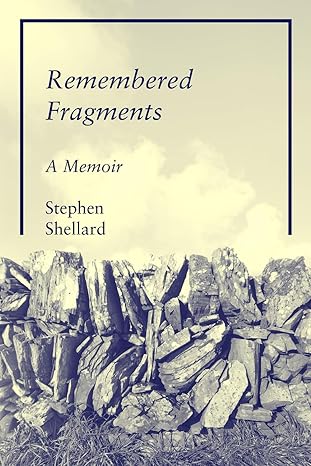
These are slightly edited extracts from my recently published memoir, Remembered Fragments available on Amazon as both an e-book and paperback. Whilst I hope these extracts may interest you in reading the full memoir, you should probably check the synopsis on Amazon before purchasing. It’s not all about football!

Sources for header composite image.

Posted in Comment, Misc | Tagged , , , , , , | 1 Comment

Open Letter to John Cooper, MP for Dumfries and Galloway Constituency

Dear John Cooper,

Congratulations on winning the Dumfries and Galloway Constituency at the general election on July 4th. We met on one occasion during the campaign. I was delivering leaflets for the Labour Candidate, James Wallace, and we spoke briefly and shook hands in passing one another on George Douglas Drive in the Troqueer area of Dumfries. I would have to admit that, of the contrasting polls featured in our respective party literature, yours proved to be the more accurate, though I think, in reality, neither was particularly on target. You must be aware that your victory was achieved on only a 29.6% share of the vote, with a very slim margin over Tracy Little for the SNP who was in turn ahead of James by an even slimmer margin. It is really concerning this point of democratic deficit that I am writing to you.

I have for many years been a supporter of electoral reform for the House of Commons and was gratified that at the Labour Conference in September 2022, the delegates voted in favour of such reform. Regrettably this resolution was not carried forward into the Labour Party manifesto, I don’t doubt because it was not seen as an issue which would play well at the election. The nature of our politics in the current era is not favourable to reflection on finer points of policy and constitutional arrangements, but that indeed is one of the reasons reform of the electoral system is so important.

It is my hope that the Labour Government will succeed in their programme to stimulate growth in the economy, address current failings in the NHS, to build affordable homes, to address the challenges of climate change and environmental depletion, and to deal efficiently, fairly and with humanity with migrants; but I know these are huge challenges and that only if the electorate is persuaded that things are improving will Labour win a second term. So then what? Perhaps another Conservative Government, definitely not something I would favour; but what concerns me more is the current positioning of Reform UK who won 9.4% of the vote in the recent election and now have seats in Parliament and who could very well build on the widespread dissatisfaction with our politics – after all 40% of the electorate did not vote at all.

When I was out working for Labour in the election campaign I went to one door which had pinned to it a hand written note with the following message: “No political leaflets or callers. You’re all parasites!” Well of course I had a laugh at this, and would have welcomed a conversation with the author of such a pithy message. I might have enjoyed trying to persuade him or her that there are politicians in all parties who have a genuine desire to change things for the better. My principal point would have been that it is the political system rather than individual politicians which is failing us.

In a number of other instances the leaflets I offered to people were declined without any enquiry into the matter of which party they favoured. In such cases I would invariably say: “Perhaps we might agree that our politics is in need of reform.” That suggestion was always received with affirmation and occasionally resulted in an amicable and constructive discussion of how this might be done.

I also encountered individuals who made clear their support for Nigel Farage and their distrust of politicians in all of the other main parties. I imagine that it was Labour, Conservative and the SNP who they had in mind when making these damning comments. A frequent issue raised by such individuals was the need to control immigration, despite the fact that in a Dumfries and Galloway context this issue would appear to a casual observer to be a very marginal concern. I sensed that the presence of an asylum hotel on the margins of Dumfries has been noticed and that the threat of its residents, who may be seen cycling to and from the town centre, magnified out of all proportion. The widely publicised rhetoric of Nigel Farage clearly has a part to play in engendering the mistrust and even fear which some people clearly feel when they encounter groups of young men speaking languages other than English.

I believe the Labour Party has every intention of bringing greater efficiency to the way in which migrants are processed and also taking strong action against the criminals who are profiting from their illegal transport to the United Kingdom. However it also clear that the civil wars, the failed states and climate change which are prompting people to seek a more secure life in Europe, are problems that will not be resolved in a single parliamentary term. Perhaps the five year term of this Labour government will be sufficient to reassure the politically disaffected and to rebuilt their trust in politics, but I fear that it will not.

The Reform Party which Nigel Farage leads, spell out a number of proposed constitutional changes in their manifesto, or, as they style it, their “Contract with you.” These changes include reform of the House of Lords, a reform many in the Labour Party, including Keir Starmer, support. “Thereafter,” they say, there should be a referendum on constitutional reform. I doubt very much their enthusiasm for this will last beyond the point at which they win a majority of seats in the House of Commons. Nigel Farage is very happy to ally himself with Donald Trump, the most duplicitous individual ever to emerge in the politics of the modern era and thus Farage’s commitment to genuine democratic reform lacks credibility.

To be clear: the constituency from which Reform draws its support has not been properly represented in our politics for many years. This must change, and the most critical reform to enable a more grounded and constructive dialogue between all political parties and factions will be to establish a fairer voting system.

In a recent edition of BBC’s Any Questions, I listened to Lord Falconer, a Labour Peer, explain why the current First Past the Post Electoral system is the best available to us. I was shocked by his complacency in the face of a manifest democratic failure in the result of the recent election. I say this even as a supporter of the Labour Party who have so conspicuously benefited from the outcome. I hope you may be sufficiently interested in the issues raised in this letter to consider a more detailed response to Lord Falconers comments, available here, in which a number of suggestions are offered regarding the form of proportional representation best suited to the House of Commons.

I am sure you will be very busy with your constituency work in the coming parliamentary session, but I am very open to discussion of the issues raised in this letter, either by email or in person.

Kind regards,

Stephen Shellard

Posted in Comment, Electoral Reform | Tagged , , , , , | Leave a comment

Sunlit uplands revisited

On the edition of BBC Radio’s Any Questions broadcast immediately following the UK election on July 4th, I was shocked to hear Charlie Falconer – Lord Falconer, who I have always thought of as something of a wise owl – defend the UK’s First Past the Post electoral system. He argued that it preserved an essential constituency link with each MP and that it prevents small parties gaining an influence disproportionate to their presence in Parliament.

As previously discussed on this blog, these comments indeed pinpoint failings of some systems of PR, but there are very well known devices for avoiding such systemic defects, most obviously insisting on a threshold vote to gain any seats in the Parliament at all.

For the UK Parliament, one could be more radical. How about a system which would award seats in Parliament to just 5 parties, those gaining most votes across the nation? This could be done by having a second round in the election with just those 5 parties represented on the ballot paper.

Equally, under the Single Transferable Vote system [Note to Charlie Falconer – That’s a constituency based system,] this could be achieved in a single election, though the counting of the vote would be fiendishly complicated. Such a system would allow a vote for a nationalist candidate, or for the Monster Raving Loony Party or some single issue candidate, whilst also offering the opportunity to vote for one of the 5 parties with genuine ambition to participate in the government of the UK. The result would be a more straight talking politics focused on explaining and arguing for every vote rather than an obsession with winning a few critical seats and the sterile, gaff averse, tetchy discourse, which results. Yes, parties we don’t like – or certainly that I don’t like – would win seats, but if you think that is not part of healthy democratic politics then you should take a listen to the most recent edition of the Leading podcast, a very refreshing interview with former Danish Prime Minister, Helle Thorning-Schmidt, in which she talks about the challenges of making pragmatic compromise in a parliament with 8 different Parties. Get with the programme, Charlie Falconer.

References

Denmark’s former PM on the power of centrist politics, fighting misogyny and joining the Kinnock empire (Helle Thorning-Schmidt) https://podcasts.apple.com/gb/podcast/denmarks-former-pm-on-the-power-of-centrist/id1665265193?i=1000661430340

BBC Radio 4, Any Questions with Lord Falconer, Professor Matt Goodwin, Layla Moran MP, Polly Toynbee, Lord Willetts, first broadcast, Friday 5th July. https://www.bbc.co.uk/programmes/m0020pjc

Zoe Williams – Making Britain’s voting system fairer won’t enable parties like Reform – it’s the only way to challenge them https://www.theguardian.com/commentisfree/article/2024/jul/10/britain-voting-system-proportional-representation-reform-challenge?

UK Election Results, BBC [from where the images in this post are also derived.] https://www.bbc.co.uk/news/election/2024/uk/results

Sunlit uplands: a vision for the renewal of electoral and party politics – A more lengthy discussion of electoral systems, considering strengths, defects and opportunities. Sunlit uplands: a vision for the renewal of electoral and party politics

Posted in Comment, Electoral Reform, Podcasts etc. | Tagged , , , , , , , , , | 1 Comment

Change…real change

I got the result I wanted but I fear for the future of British politics if we do not change our electoral system which, on the basis of a low turnout – evidence of widespread disenchantment with politics – produced a result which fails to reflect the realities of our political landscape. I say this, even though one of the losers in this respect was Reform, a party with which I profoundly disagree. But the under representation of the Greens also concerns me. Oddly, for once, the Liberal Democrats would appear to have won seats roughly proportional to their support in the country. All of Sir Ed’s bungy jumping and stunts have paid dividends.

And here’s the thing. It really wouldn’t cost very much to make the change.

Posted in Comment | Leave a comment

Mac Siccar!

00000032
Posted in Comment | Leave a comment

Remembered Fragments Playlist

Remembered Fragments is a memoir. For those who may have stumbled upon the page, the book and a summary of its content is now available for sale on Amazon at a cost of £12, plus postage, the latter charge being reserved only for those who have not fallen into the trap of Amazon Prime. A Kindle version is also available at a cost of £5 with no delivery charge. The URL for the playlist which includes songs mentioned in the book is tinyurl.com/remfrag.

Posted in Misc | 5 Comments

Beached

Kippford, south west Scotland, 8th April, 2024, 5 pm.

Posted in Comment | Tagged | 2 Comments

Outgrow the System

A DOCUMENTARY ABOUT TRANSITIONING TO A SUSTAINABLE ECONOMIC SYSTEM

With thanks to Reel to Real Cinema, the Stove Network and the Climate Kitchen Dumfries for providing the opportunity to view and discuss this film. 

There is no argument with the fundamental premise of Outgrow the System, that we need to transition to a sustainable economy and that the growth model embodied in neo-liberal economics is threatening our future. The film is well made and full of optimism and shows some encouraging examples of where changes are actually being made.  A number of these were  inspired by Kate Raworths “Doughnut Economics”, evidence one might think that she is onto something important. Doughnut economics however is not really an economic theory, rather it is a set of aspirations. Raworth features prominently in the film and proposes her ideas with an obvious passion which, for me, overstates the importance of what she has to say. Of course we must move to an economy which meets the needs of the poorest in the World whilst also protecting the environment from the depredations of industrial production.  This all seems to me very reasonable and not a return to stone age living as some of her opponents might wish to characterise her proposition. Raworth will certainly be an inspiration to many but there is a shortfall of Realpolitik in her thinking. Just as some are adopting doughnut thinking in the administration and planning of cities, so others are pushing back energetically against such change. 

Timothée Parrique, interviewed for the film says with comparable conviction:  “Anything that has been socially constructed can be socially deconstructed” but offers no guidance as to how this “deconstruction” may be catalysed.  The capitalist economy grew spontaneously, one might even say organically, from the roots of the industrial revolution in the 18th and 19th Century. Its defining characteristic in that early phase was a lack of regulation. Having passed through various crises and collapses Keynsian economics emerged in the 20th Century and influenced Franklin Roosevelts New Deal in the United States, a genuine attempt to manage capitalism so that it might work in favour of the whole population and attain some kind of stable pattern of growth. The economic theories of Frederick Hayek were, however, deeply critical of Keynsianism and adroitly, one might even say cunningly, framed their ideas as a defence of individual freedom against the intrusive and expanding regulation of the state. 

The election of Margaret Thatcher in 1979 and Ronald Regan in 1980 introduced the modern era of neo-liberal economics based on Hayek’s ideas.[1] One may argue as to whether the  “reforms” Thatcher and Regan introduced were an essential part of the extraordinary technological revolution which ensued, but clearly free marketeers and deregulators are happy to claim credit for the iPhone, the Internet and the coming storm of Artificial Intelligence. 

Can any of this revolution, as Timothée Parrique suggests, “be socially deconstructed.”  I think it may be possible to effect a political deconstruction of some of these developments where they are harming the environment, but that will take a managed economy of the kind that Roosevelt pioneered and such a project clearly has opponents, not all of them rich oligarchs. People have become very attached to wasteful patterns of consumption, to foreign holidays, to driving to the supermarket. The appeal of voices on the populist right who wish to undermine the power of the state, is obvious. 

Outgrow the System drew attention to “globalised embedded inequality” and the role that multinational corporations play in our unequal world. These companies operate in a realm where they can, with relative ease, move their operations to countries with a framework of low tax and regulation. They can lobby politicians, and undermine democratic decision making. 

No significant ideas were put forward in the film which might bring multinationals under greater democratic control. There was no talk of how we might build effective supranational democracy;  there was no talk of state-funding for political parties as a way of stemming the political influence of rich donors;  there was no talk of electoral reform, important in a United Kingdom context as a way of building a more consensual politics, more resilient to the blandishments of the populist right.  

It has to be admitted that each one of these constitutional changes is a major political campaign in its own right. I am not proposing, however, that we should put promotion of Doughnut Economics on hold whilst we get these other things done. These are all campaigns which can and should be run in parallel.  

Just another couple of points arising from Outgrow the System.

One interviewee stated: “We have enough food.” They were making the point that malnutrition is a problem of distribution not production.This is undeniable, but in a film expressly about the future of our planet, why was it not also said that consumption of animal protein is creating a huge problem for the environment, is a factor involved in the destruction of the rainforest, and that we must make a cultural shift to a diet based on vegetable protein.  Achieving this will not be easy, though there are important voices, including Henry Dimbleby in his book Ravenous: How to get ourselves and our planet into shape  making the case that changing our diet is not just about the health of the planet but is also very much bound up with the health of individuals. [2]

The film featured a number of examples of worker cooperative type enterprise and made a strong case for more democracy in industry. These are interesting ideas, but it seems clear that they will fit more easily into some enterprises than others and it is important to accept  that any closed democratic system does not always work in  favour of  wider democratic interests. The most frequently quoted example of this problem is trade unionism, a movement I strongly support, by the way. I note a recent interview with Sajid Javid where he spoke of his father’s attempt to become a bus driver in the United Kingdom and how this was blocked by his father’s Trades Union which insisted that only white people could drive buses and that he must be content with being a conductor.  He wasn’t content with that however, and won the right through court action to be a driver. Perhaps however, we shouldn’t be surprised that his son, Sajid, went on to join the UK Tory Party. [3]

References 

[1] Past, Present and Future, podcast, American Elections: 1980 

[2] Henry Dimbleby  – book,  Ravenous: How to get ourselves and our planet into shape   

[3] Leading,  podcast,  Interview with Sajid Javid

Acknowledgments

Reel to Real Cinema https://thestove.org/projects/ongoing-projects/reel-to-real-cinema/ 

The Stove Network  https://thestove.org/about/

The Climate Kitchen Collective  https://climatekitchen.co.uk/ 

RåFILM  https://rafilm.se/en/about 

Thanks to Katie Shellard for corrections and providing additional detail from the film.

Featured Image 

Hedge laying, near Loch Arthur, Dumfries, 23rd February, 2024, photo SPS

Posted in Comment, Economics, Electoral Reform, Environmental, Other Constitutional discussion | Tagged , , , , , , , , , , | 3 Comments

George Monbiot: I once admired Russell Brand. But his grim trajectory shows us where politics is heading

George Monbiot’s Guardian article is definitely worth a read if at some time previously you thought, as I did, that Russell Brand was someone of great originality, clever, funny, articulate, worth listening to despite his occasional missteps and his rejection of political engagement. I never thought the latter sound thinking, though I could perfectly understand the frustration with our political system which it expressed.

Also worth a listen, with a related theme, and including content on Russell Brand amongst others, is Helen Lewis’s Radio 4 series “The New Gurus” available as a podcast.

Posted in Misc, Podcasts etc. | Tagged , , , | 1 Comment